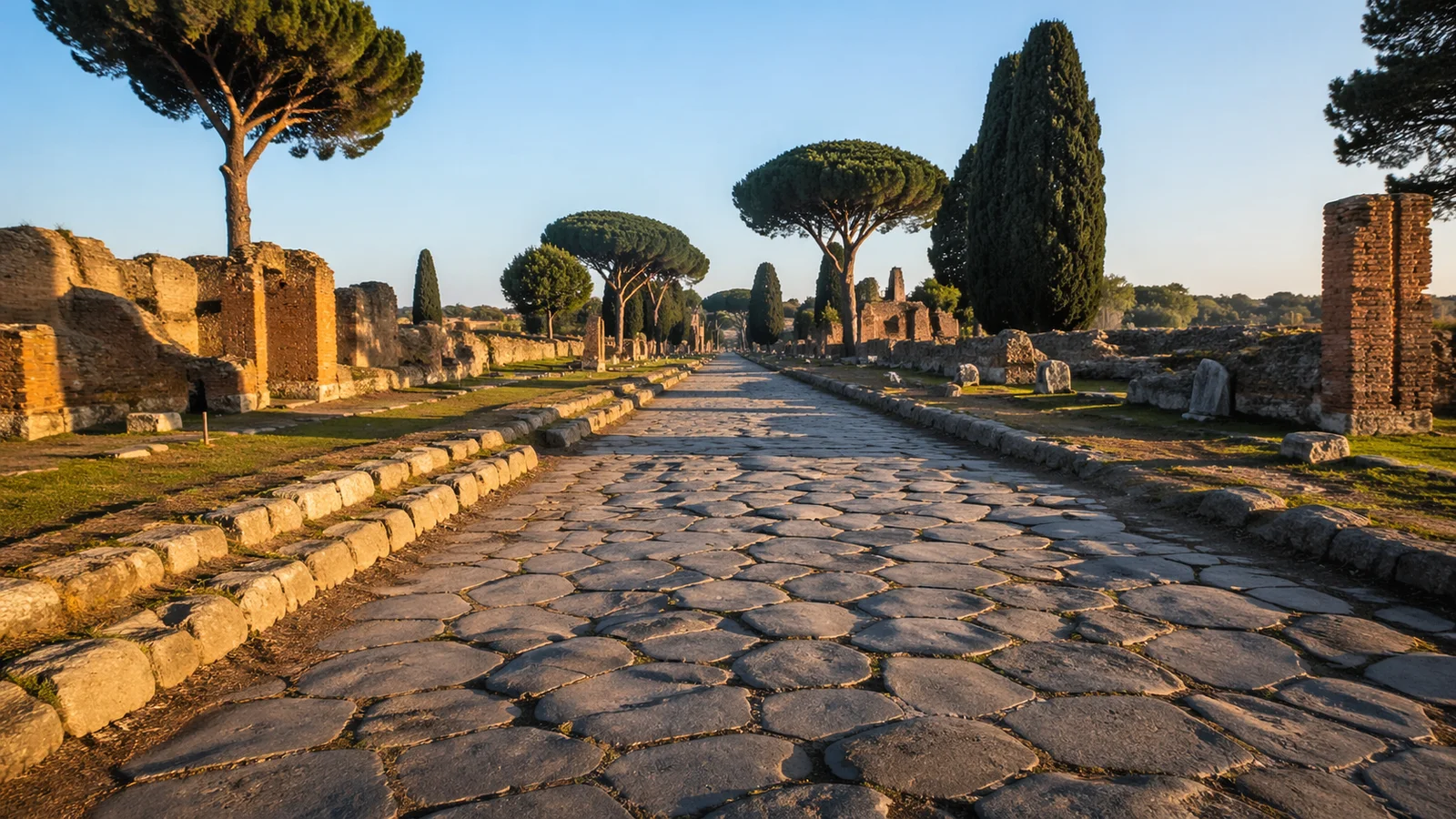
Cesta Roman: The Ancient Roman Roads That Built an Empire
Introduction:
When we talk about ancient civilizations, the Romans always stand out for their engineering skills, discipline, and long-lasting impact. One of their greatest achievements is the cesta roman system, or Roman roads.
These roads were not random tracks in the dirt. They were carefully planned, straight, and built to last for centuries. The Romans created them with one main goal: to connect their massive empire efficiently. But over time, these roads became much more than military or trade routes. They became the backbone of communication, culture, and administration.Even today, if we travel across parts of Europe, we are often unknowingly following the same routes designed over 2,000 years ago.
What Exactly Is Cesta Roman?
The term cesta roman simply means “Roman road.” But in historical terms, it represents a highly advanced transportation network created during the expansion of the Roman Empire.
These roads were built for:
- Military movement
- Trade and commerce
- Communication between cities
- Administrative control
- Cultural integration
Unlike many ancient roads that disappeared over time, Roman roads were built with layers of stone, gravel, and sand, making them extremely durable.
The Origin of Roman Roads
The idea of organized roads existed before Rome, but the Romans took it to a completely new level.
As the city of Rome expanded, it needed a strong infrastructure to support its growing population and military ambitions. Around 300 BCE, Roman engineers began designing roads that could support heavy foot traffic, horses, wagons, and armies.The Romans didn’t just build roads between nearby towns. They built them across continents.
The phrase “all roads lead to Rome” wasn’t just a saying—it was almost literally true. The road system was designed so that every major route connected back to the capital.
Engineering Genius Behind Cesta Roman
One of the most impressive things about cesta roman is its engineering.
Roman roads were built in layers, usually including:
- A deep foundation of sand or gravel
- Large flat stones for stability
- Smaller stones for filling gaps
- A slightly curved surface for drainage
This design helped prevent water damage and made the roads usable even in heavy rain.Another key feature was straight alignment. Roman engineers preferred building roads as straight as possible, even if it meant going over hills or through forests. This saved time and made travel faster.
They also built milestones along the roads to measure distance. These milestones helped travelers know how far they were from major cities.
Famous Roman Roads
Several Roman roads became legendary for their importance and scale. Let’s look at a few of them.
1. Via Appia (Appian Way)
The Appian Way is one of the oldest and most famous Roman roads. It was built in 312 BCE and connected Rome to southern Italy.
It was often called the “Queen of Roads” because of its importance in military movement and trade. Even today, parts of it still exist near Rome.
2. Via Augusta
The Via Augusta was one of the longest roads in the Roman system. It stretched through Hispania (modern-day Spain) and connected many important cities.
This road helped Rome control its territories in the Iberian Peninsula and made trade more efficient across the region.
3. Via Egnatia
The Via Egnatia connected the Adriatic Sea to Byzantium (modern Istanbul). It was a key route for moving armies and goods between Europe and Asia.
This road played a major role in spreading Roman influence into the eastern regions of the empire.
Military Importance of Cesta Roman
One of the biggest reasons the Roman roads were so important was the military.The Roman Empire relied heavily on fast troop movement. With cesta roman, armies could travel quickly to any part of the empire.
This gave Rome a huge advantage over enemies. If a rebellion started in one province, soldiers could be sent there rapidly. This helped maintain control over such a large territory.
The roads also allowed supply wagons to follow the army, carrying food, weapons, and equipment.
Trade and Economic Growth
Cesta roman also transformed the economy.
Before roads, transporting goods was slow and expensive. But with Roman roads:
- Trade became faster
- Goods became cheaper
- Markets expanded
- Cities grew richer
Merchants could move olive oil, wine, grain, metals, and textiles across long distances without major delays.This economic boost helped Rome grow into one of the most powerful civilizations in history.
Cultural Exchange Through Roads
Roman roads didn’t just move goods and soldiers—they moved ideas.
As people traveled, they shared:
- Language
- Religion
- Architecture
- Customs
- Technology
This created a more connected and unified empire.
Many regions influenced by Roman roads still show traces of Roman culture today, especially in language and architecture.
Life Along the Roman Roads
Traveling on cesta roman was not always easy. While the roads were well-built, journeys could still be long and tiring.
Travelers often stopped at roadside stations called mansiones. These were rest stops where people could eat, sleep, and change horses.There were also smaller stations for quick breaks.
Security varied depending on the region. Some roads were safe and heavily patrolled, while others had risks from bandits.Still, compared to other ancient civilizations, Roman roads made travel far more reliable.
Decline of the Roman Road System
After the fall of the Roman Empire, many roads fell into neglect.Without centralized maintenance, some roads were damaged or covered by nature. However, many remained in use for centuries.
In fact, some modern European highways still follow the exact paths of Roman roads.This shows how strong and well-planned the system really was.
Legacy of Cesta Roman Today
Even today, the influence of cesta roman is everywhere.
We can see its legacy in:
- Modern highways in Europe
- Urban planning systems
- Engineering techniques
- Archaeological sites
- Historical tourism routes
Cities like Rome still preserve ancient road sections as historical landmarks.
Tourists from around the world visit these roads to walk on the same paths used by Roman soldiers and traders centuries ago.
Why Cesta Roman Still Fascinates Us
There’s something timeless about Roman roads. They remind us that great engineering can outlive empires.
We are still impressed by:
- Their durability
- Their scale
- Their efficiency
- Their impact on history
Even in the modern world, where technology is highly advanced, the Roman road system is studied in engineering and history courses as an example of perfect planning.
Modern Lessons from Roman Roads
Cesta roman teaches us several important lessons:
- Planning matters – The Romans built roads with long-term thinking.
- Durability is key – They focused on structures that could last centuries.
- Connectivity builds power – Connected regions create strong economies.
- Infrastructure shapes civilization – Roads shaped how Rome controlled its empire.
These lessons still apply to modern cities and countries today.
Conclusion
The story of cesta roman is not just about ancient roads—it’s about how infrastructure can shape the destiny of a civilization. Through the road network of the Roman Empire, the Romans built a system that connected people, supported armies, boosted trade, and spread culture across continents.
Even after thousands of years, the legacy of these roads is still visible in modern transportation systems and surviving archaeological paths.When we walk on or study these ancient routes, we are not just looking at stones and paths—we are witnessing the engineering backbone of one of the greatest empires in history.
Stay informed with our latest news and alerts UK Punting.